


Call Anytime
(682) 738-8850
SERVICES
Lorem ipsum dolor sit amet, consectetuer adipiscing elit
Options in Retirement
Lorem ipsum dolor sit amet, consectetuer adipiscing elit

Where do I start? Maybe you have some questions:
Will I run out of money?
What if I have to go to a nursing home?
Information on needed documentation.
Do I have to pay taxes?
How does social security work?
What happens when I get sick? Health Insurance Options (Medicare)
Watch segment on "Laddering Annuities"
What is your knowledge level? Results of a recent RICP income literacy survey - Read about it here
A great article: 5 steps to retirement planing 2023: An Introduction & How-to Guide
6% Of Your Paycheck is Becoming the New Standard for 401(k) Saving
Lorem ipsum dolor sit amet, consectetuer adipiscing elit
Watch segment on "laddering annuities"
Check out this great video
Lorem ipsum dolor sit amet, consectetuer adipiscing elit
Watch "The Retirement Deception"
Real people who needed different advise
Navigating High Inflation
2020 retirement Literacy results
Will I run out of Money in Retirement
This is one of the topics we hear very often.
If you are done working and rely on what you have accumulated during your working years, you must have a plan to preserve, if not grow, your money.
Financial planners have told us for a long time that the models show that the average person can draw out about 4% of the money they have put away a year in retirement. This is no longer true! Retirement experts put that rate at 2.4% What now?
But - inflation has not been this high (~11%) in a long time
Who is that average person? Part of your plan requires some introspect of what retirement means to you and your spouse.
Our retirement specialists like to think of retirement in three phases:
1. The Go-Go years.
2. The Slow-Go years.
3. The No-Go years.
The Go-Go Years (spend a lot)
You want to do everything you haven't been able to do in your working years. Visit other countries, travel the U.S., vacation in Mexico or? Your body and mind are in great shape.

The Slow-Go Years (spend less)
OK, you are in your 70's, body is starting to give you a few problems. Still want to go to concerts and local events, but you are starting to slow down on visiting other countries, buying new cars, etc.
The No-Go Years (spending moves to healthcare)
In your 80's? Playing cards with friends, spending more time with the Grandkids takes a lot of energy! If mobility problems come into play, you may be remodeling the house or downsizing even more to reduce home maintenance. The next unfortunate event could be a rehab facility to treat an illness, or even moving into an assisted living facility.
How to fund these three time frames - too much to talk about here, call for a chat!
Social Security
Medicare
Long Term Care
Taxes
Nursing Home / Assisted Living

Now is the time to get real
As we age we may need extra help with daily activities. At some point, support from family, friends, and local programs may not be enough. People who require help full-time might move to a residential facility that provides many or all of the long-term care services they need.
Facility-based long-term care services include: assisted living facilities, nursing homes, and continuing care retirement communities.
Some facilities have only housing and housekeeping, but many also provide personal care and medical services. Many facilities offer special programs for people with Alzheimer's disease and other types of dementia.
What Is Assisted Living?
Assisted living is for people who need help with daily care, but not as much help as a nursing home provides. Assisted living facilities range in size from as few as 25 residents to 120 or more. Typically, a few "levels of care" are offered, with residents paying more for higher levels of care.
Assisted living residents usually live in their own apartments or rooms and share common areas. They have access to many services, including up to three meals a day; assistance with personal care; help with medications, housekeeping, and laundry; 24-hour supervision, security, and on-site staff; and social and recreational activities. Exact arrangements vary from state to state.
What Are Nursing Homes?
Nursing homes, also called skilled nursing facilities, provide a wide range of health and personal care services. Their services focus on medical care more than most assisted living facilities. These services typically include nursing care, 24-hour supervision, three meals a day, and assistance with everyday activities. Rehabilitation services, such as physical, occupational, and speech therapy, are also available.
Some people stay at a nursing home for a short time after being in the hospital. After they recover, they go home. However, most nursing home residents live there permanently because they have ongoing physical or mental conditions that require constant care and supervision.
To look for and compare nursing homes in your area, see Medicare's Nursing Home Compare. Also get tips for choosing a nursing home.
Long-Term Care Options
How to Pay for Long Term Care
How to Pay for Assisted Living
How people pay for long-term care—whether delivered at home or in a hospital, assisted living facility, or nursing home—depends on their financial situation and the kinds of services they use. Often, they rely on a variety of payment sources, including personal funds, government programs, and private financing options.
Personal Funds (Out-of-Pocket Expenses)
At first, many older adults pay for care in part with their own money. They may use personal savings, a pension or other retirement fund, income from stocks and bonds, or proceeds from the sale of a home.
Much home-based care is paid for using personal funds ("out of pocket"). Initially, family and friends often provide personal care and other services, such as transportation, for free. But as a person's needs increase, paid services may be needed.
Many older adults also pay out-of-pocket to participate in adult day service programs, meals, and other community-based services provided by local governments and nonprofit groups. These services help them remain in their homes.
Professional care given in assisted living facilities and continuing care retirement communities is almost always paid for out of pocket, though, in some states, Medicaid (see below) may pay some costs for people who meet financial and health requirements.
Read on about Fixed Indexed Annuities to "put money aside without losing it"

Fixed Indexed Annuities / IULs (life insurance + annuity)
Secure Guaranteed Retirement Account
As a result, less than 20% of Americans have what we call an “SGRA” account set up-while more than half the population lets their money just sit as a lump sum without proper protection from running out.
The only question is…
As a result, less than 20% of Americans have what we call an “SGRA” account set up-while more than half the population lets their money just sit as a lump sum without proper protection from running out.

Why hasn’t my financial advisor ever told me about this?
Reason 1: Most financial advisors don’t even know about this, Nor, do they know how to utilize it properly to get you the most value.
Reason 2: Most financial advisors recommend financial vehicles that pay them the highest commissions rather than put your interest at heart.
Reason 3: The advisor can’t charge you yearly management fees so it’s not worth it for them to use it.
Signing up for Medicare: what you need to know
Signing up for Medicare: what you need to know
Most Americans become eligible for Medicare at age 65, but receiving the right benefits for your needs isn’t automatic. Often, you need to sign up — and make some big choices once you do. If you’ve taken a look at the process and feel confused, you’re not alone. One study finds that nearly 25 percent of Americans aged 65 or over don’t fully understand the Medicare health insurance they rely on for coverage.
Understanding the different parts of Medicare
If you’re not already familiar with the four parts of Medicare and what each one covers, here’s a quick overview. Keep in mind that Parts B, C and D all require monthly premium payments. For a more in-depth look at all parts of Medicare, visit the official Medicare website.
Part A: Hospital insurance. This helps pay for inpatient care at a hospital or some time at a skilled nursing facility following a hospital stay, hospice care and some home health care.
Part B: Medical insurance. This helps pay for certain doctors’ services, outpatient care as well as other services and supplies that hospital insurance (Part A) doesn’t cover. It is optional coverage but late enrollment penalties apply in some situations if you decide to enroll after you’re first eligible.
Medicare Advantage: Also referred to as Part C, private companies approved by Medicare offer these plans that typically bundle hospital, medical and prescription drug coverage into one. They are another way to get Medicare Parts A and B coverage and some include additional benefits for vision, hearing and dental. (Please note that you must have Medicare Parts A and B to enroll.)
Part D: Prescription drug coverage. Also offered by private companies approved by Medicare, these plans are available for anyone with Parts A and B to help you pay for medications prescribed by your doctor as well as many recommended shots or vaccines. Although this coverage is optional, you may pay a late enrollment penalty for as long as you have Medicare prescription drug coverage if you decide to sign up for it later.
Answers to some of the most common questions pre-retirees have about Medicare
Use this information to sign up at the right time to help get the coverage that’s best for you.
Q: When should I enroll?
A: It’s recommended you enroll for Medicare as soon as you are first eligible. If you’re already receiving a Social Security retirement check, you are automatically enrolled in Medicare Parts A and B the month you turn 65. But if you aren’t receiving benefits yet, you will need to sign up during an Initial Enrollment Period around your 65th birthday at your nearest Social Security Administration office or at SSA.gov. If you are covered under an employer’s group health plan after age 65, you can delay signing up for Parts A, B and D without having to pay late-enrollment penalties.
Q: How do I choose the right coverage for my needs?
A: If you like automated tools, try National Council on Aging’s (NCOA) Age Well Planner, which poses a series of questions and gives you a report based on your circumstances. The State Health Insurance Assistance Programs (SHIP), which are funded by a federal grant, are another resource that provides free, unbiased Medicare information. Use the online SHIP Locator to find contact information for your state, or you can compare plans on the official Medicare website.
Q: Are there enrollment deadlines?
A: When you’re first eligible for Medicare, there is a seven-month Initial Enrollment Period (before, during and after your birthday month) to sign up for Parts A and/or B. After that, you can sign up for Part A for free any time after your Initial Enrollment Period. If you want to enroll in Part B after the Initial Enrollment Period, you can only do that during the General Enrollment Period that runs annually from January 1 to March 31.
Keep in mind, there are late-enrollment penalties for Medicare Parts A, B and D. If you don’t qualify for premium-free Part A and choose not to enroll when you’re first eligible, you’ll pay 10 percent of your monthly premium for twice the number of years you waited to sign up. The enrollment penalty for Part B is 10 percent of the monthly premium for each year you wait, which you’ll pay for as long as you have Part B. For Part D, the late enrollment penalty is 1 percent of the national base premium for each full month you wait to enroll unless you have creditable coverage.
Q: What does Medicare cost?
A: It depends on several factors, but there are some general guidelines. Most people qualify for premium-free Part A, but there are still out-of-pocket deductibles and coinsurance. In 2022, the standard Part B monthly premium is $170.10 but may be higher for people with a higher income, and there are also deductibles and coinsurance costs associated with Part B. Medicare Advantage Plans (Part C) and prescription drug plans (Part D) are issued by private companies, and the costs vary. You can compare costs for these plans or get information from SHIP at shiptacenter.org.
Q: How can I save on premiums?
A: Shop and compare plans every year during the Open Enrollment Period from October 15 to December 7. According to the Kaiser Family Foundation, more than half of all people on Medicare do not compare their coverage options annually, but it’s common for plans to change from year to year. You may pay too much if you don’t switch plans when necessary, as costs and coverage can change every year. There are programs called Extra Help and Medicare Savings Program that can pay the premiums and costs associated with Medicare for people who meet the income and asset criteria, which you can find at medicare.gov.
In addition, you should consider taking advantage of Medicare preventive services to get regular screenings and preventive medicine to detect and treat disease early. Medicare pays for flu shots, mammograms, colonoscopies, an annual wellness visit and several other services at no out-of-pocket cost.
For more information about Medicare, and before making an enrollment decision, sign in or create an account at mymedicare.gov or contact Medicare at 800-MEDICARE.
Retirement Income Survey Results
Protect Your Business with Stone Retirement Income
SEPTEMBER 15, 2020
Four out of five older Americans fail to understand the basics of how to plan for a secure retirement successfully. That’s according to results from The American College of Financial Services’ 2020 Retirement Income Literacy Survey.
The survey, the third of its kind performed by The College, included feedback from over 1,500 people nationwide. It raised concerning questions about how well-prepared many older Americans are to leave the workforce and draw down their savings and accumulated assets, despite an increased focus on educating the general public about the importance of proper retirement planning.
To qualify for participation in the study from April 29 to May 18, 2020, during the beginning of the Covid-19 pandemic, participants had to be between 50 and 75 years old and have at least $100,000 in household assets (not including their primary residence). They were then asked to respond to a series of 78 questions assessing their financial and social status and testing their knowledge of basic financial planning and retirement planning principles. On the 38 questions that addressed retirement planning, 81% of participants received a failing grade, indicating a distressing lack of understanding regarding financial planning fundamentals or current retirement realities. In fact, the overall average score on the quiz was 42%, with only a third of consumers attesting to confidence in their retirement planning skills.
Faculty at The College expressed unease about the study's results – especially considering Covid-19 pushed many consumers toward unplanned and premature retirements.
“With a troubled economy and an acceleration of early or forced retirements, consumer understanding of retirement principles is particularly important. Yet the survey demonstrates that retirement literacy remains troublingly low,” said Steve Parrish, JD, RICP®, CLU®, ChFC®, RHU®, AEP®, Adjunct Professor of Advanced Planning in The College’s Retirement Income Certified Professional® (RICP®) Program.
The Income and Investment Knowledge Gap
The general lack of retirement knowledge among consumers who took the survey was broad in scope, covering many concepts College faculty and industry experts agree are fundamental to sound retirement planning. More than half of respondents underestimated the current life expectancy of a 65-year-old man, suggesting they may not realize how long their accumulated assets may have to last in retirement. Only 32% were aware of the limits on amounts they could safely withdraw from a retirement account each year without suffering tax penalties, and 65% didn’t know that a negative single-year return in a retirement portfolio is more impactful if it happens at the time of retirement rather than before or after, suggesting a lack of understanding in how the pre-retirement period factors into long-term planning.
“Determining how much you can spend in retirement when you don’t know how long you will live or what market returns you will experience is complicated,” said Wade Pfau, PhD, CFA, RICP®, Professor of Practice at The College. “Unfortunately, the task is even harder for Americans who do not recognize how to properly evaluate these risks in the first place. The survey demonstrates that these retirees don’t fully understand the consequences a bad market can have on their long-term retirement prospects.”
In addition, while over 60% of consumers reported on the survey they felt at least moderately knowledgeable about investment management, survey results showed that, in practice, these individuals might be overconfident in their abilities. Only 18% of those surveyed knew B-rated corporate bonds had a higher yield than AAA corporate bonds or treasury bonds. Furthermore, only 26% understood the relationship between bonds and bond funds and interest rates, demonstrating a cognitive dissonance regarding investing.
Long-Term Care Realities Leave Many Unprepared
With the public health crisis of the Covid-19 pandemic looming large over society, the survey found that considerations about long-term healthcare needs caught most consumers off-guard. Only 31% of survey respondents said they had a plan in place for how to fund long-term care needs, and only 23% said they had some kind of long-term care insurance.
The divergence between belief and reality regarding the need for such insurance was even more concerning. Only half of the respondents said they considered it even somewhat likely they would need long-term care services in the future when industry statistics state at least 70% will. More than half said they hadn’t considered long-term care a factor in their retirement plans. In addition, many consumers didn’t understand the burden the lack of such insurance could place on their loved ones: just 25% knew that family members provide the majority of long-term care services nationally, and 70% said they didn’t expect their own family to provide such care – a potentially dangerous disconnect.
“The story coming from the data suggests people underestimate their life expectancy – and what’s more, assume they will be healthy for the entirety of their life – when the truth is much different,” said Timi Joy Jorgensen, PhD, Director to Assistant Vice President of Financial Education & Well-Being at The College.
Pandemic Highlights Importance of Preparedness
Another effect of the Covid-19 pandemic on retirement planning could be felt in reactions to the market downturn it created. Surprisingly, nearly 40% of consumers reported feeling highly prepared for market turbulence, indicating an unanticipated strength of financial advice – and having a formal plan beforehand was frequently cited as a difference-maker.
While only one in three respondents reported having a written plan for retirement, those with the plan reported feeling much more prepared to deal with the downturn than those without. 54% of respondents said their financial plans are holding steady despite rough seas. However, the onset of the pandemic also shifted the mindset of many consumers, with 40% saying they now feel less comfortable taking investment risks.
“A bottom-line conclusion from this survey is that until the plan is written, it isn’t real,” said Parrish. “We are in an environment where people are coming into retirement sometimes faster than expected, without an approach to converting their pot of money into a stream of income, and yet they are looking at increased life expectancy, increased risk of a long-term care event, and decreased prospects of having their needs covered by Social Security and employer plans.”
While the stakes in the retirement planning game may be high, College thought leaders offered words of encouragement to those who may have participated in the survey and professionals in the field.
“This is a clarion call for financial advisors to help their clients increase financial literacy and, together, craft a plan for a successful retirement,” said Parrish. “Advisors should take heed of this situation and embrace the opportunity it provides to help Americans prepare for a successful retirement.”
Jorgensen agreed with his sentiments in her own statement, especially when it came to long-term care planning. “Well-prepared advisors can help with important long-term care conversations and work with clients to plan when and how to have these crucial discussions with family about the likelihood of healthcare needs,” she said.
You can see the full results of the 2020 Retirement Income Literacy Survey here.
Easiest way to Prevent Probate or you relatives
from deciding ANYTHING when you can't
Register for a complimentary 30-day trial and gain access
to a detailed guide to each essential estate planning document.

6% of Your Pay Is Becoming The New Standard For 401(k) Savings
July 4, 2024 | What's New
New hires are putting more of each paycheck into their 401(k). Not necessarily by choice.
Nearly a third of companies that use automatic 401(k) enrollment now start workers saving at 6% of their salaries or higher, about double the share of organizations that did so a decade ago, according to Vanguard Group.
A default 6% contribution rate was once considered too onerous for younger workers and too paternalistic by those who favor leaving decisions to individuals.
“Initially, many companies defaulted people into the 401(k) at 2% or 3% of pay and that’s where many stayed,” said Dave Stinnett, head of strategic retirement consulting at Vanguard. “Now, companies are trying to get workers into the plan and saving as aggressively as possible.”
The share of companies that auto-enroll workers at a 3% contribution rate has fallen to 33%. It was 56% in 2007.
Higher savings rates help ensure people take greater advantage of matching employer contributions—free money workers often leave on the table, companies say. It also boosts employees’ total savings rates closer to the 12% to 15% of annual income financial advisers often recommend for a secure retirement.
Auto-enroll boosts savings
Automatic enrollment has helped make the 401(k) more effective, especially for millennial and Gen Z workers, a large share of whom have been opted in from day one.
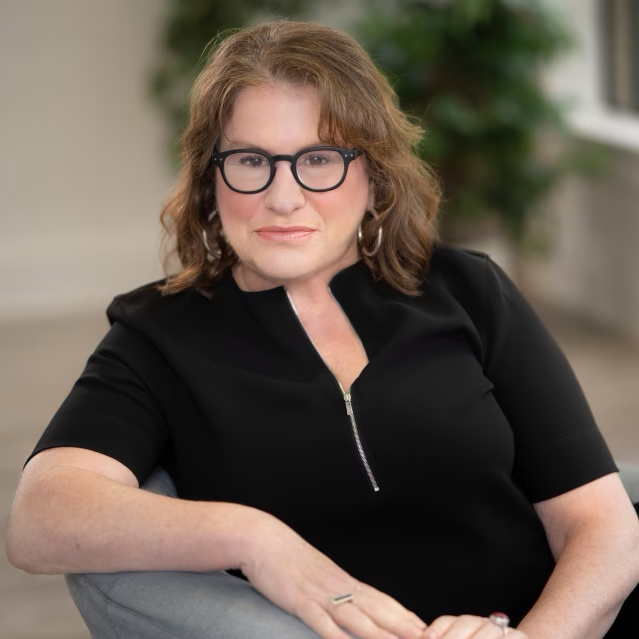
Caryl Zenker PHOTO: KELLY MOONEY PHOTOGRAPHY
About 60% of companies automatically enroll new hires, bringing 401(k) participation rates to 82% of eligible workers, up from 66% in 2007, according to Vanguard, which administers 401(k)-type accounts for nearly five million people.
Last year, the average employee with a 401(k) account at Vanguard saved 11.7% of pay, including matching contributions, an all-time high.
The jump to 6% automatic savings is a big reason for the rise in those savings rates.
People tend to take the path of least resistance when it comes to their finances, behavior that nudging techniques such as automatic enrollment capitalize on. Few people opt out.
Participants in plans with automatic enrollment saved 12.7% in 2023, on average. In 401(k) plans that require workers to sign up, savings rates averaged 10.3% last year.
Many plans further boost savings rates by automatically increasing contributions, typically by 1 percentage point a year until reaching around 10% of pay.
Starting too low
Companies originally gravitated toward auto-enrolling at 3% in part because of concern that a higher percentage might cause workers to opt out or might generate more costly employer matching contributions, said Mark Iwry, a former Treasury Department official who oversaw national retirement policy.
A 2007 study by researchers at institutions including Harvard University found that workers who were put into a 401(k) plan at 6% by default didn’t opt out in significantly greater numbers than those put in at 3%.
Still, having a higher default contribution might result in some workers taking on debt to make ends meet, studies have found.
Companies nudge harder
Workers didn’t blink when Verizon Communications doubled the starting savings rate for new hires to 6% in 2022, said Kevin Cammarata, vice president of benefits. Opt-out rates remained roughly the same as before.
Verizon wanted to help more employees take advantage of the company’s match of 100% of employee contributions up to 6% of pay, Cammarata said.
When the default savings rate was 3%, about 15% of participants didn’t increase their savings percentage.
“It was good we got them into the plan, but they were not optimizing the match,” said Cammarata.
Today 91% of the Verizon plan’s 68,000 participants are saving 6% or more, and receive the full match, up from 78% in 2020, before the switch, he said.
Some companies have even bigger defaults. Boston Consulting Group automatically enrolls eligible new hires at 10% of pay, an arrangement in place since around 2010.
When combined with the company contribution of 5% or more, depending on factors including tenure, the 10% automatic enrollment rate helps participants reach the 15% savings rate advisers recommend, said chief human resources officer Susan Grimbilas.
Smaller companies have also embraced the strategy. Portland, Ore., consulting firm Rose City Philanthropy has been automatically enrolling new hires at 6% of pay since starting a 401(k) plan in 2020. Its four employees are all saving 6% or more, said senior partner Jeri Alcock.
Alcock said she spent years in the nonprofit world and was “stunned to see people spend their lives helping other people and face retirement in poverty.” Too much was left for employees to figure out on their own, she said.
Caryl Zenker, 63 years old, a consultant who joined Rose City in 2022, said the benefits package, including the 401(k) plan, was one attraction. She didn’t realize she had been automatically enrolled.
Thanks to the automatic savings rate, Zenker said, she was able to capture the company’s 4% matching contribution immediately after becoming eligible for the plan. She now saves 14%, including the match.

Trusted Guidance, Proven Experience
Our Expertise
With over 20 years of experience in the insurance industry, our team of experts has the knowledge and skills to guide you through the Retirement Income process. We have helped hundreds of clients find a plan that works for them.


Work Hours
8 AM - 6 PM, Monday - Saturday
I'm here to assist you with any queries and will respond as quickly as possible.
© 2026 Company Name LLC . All rights reserved